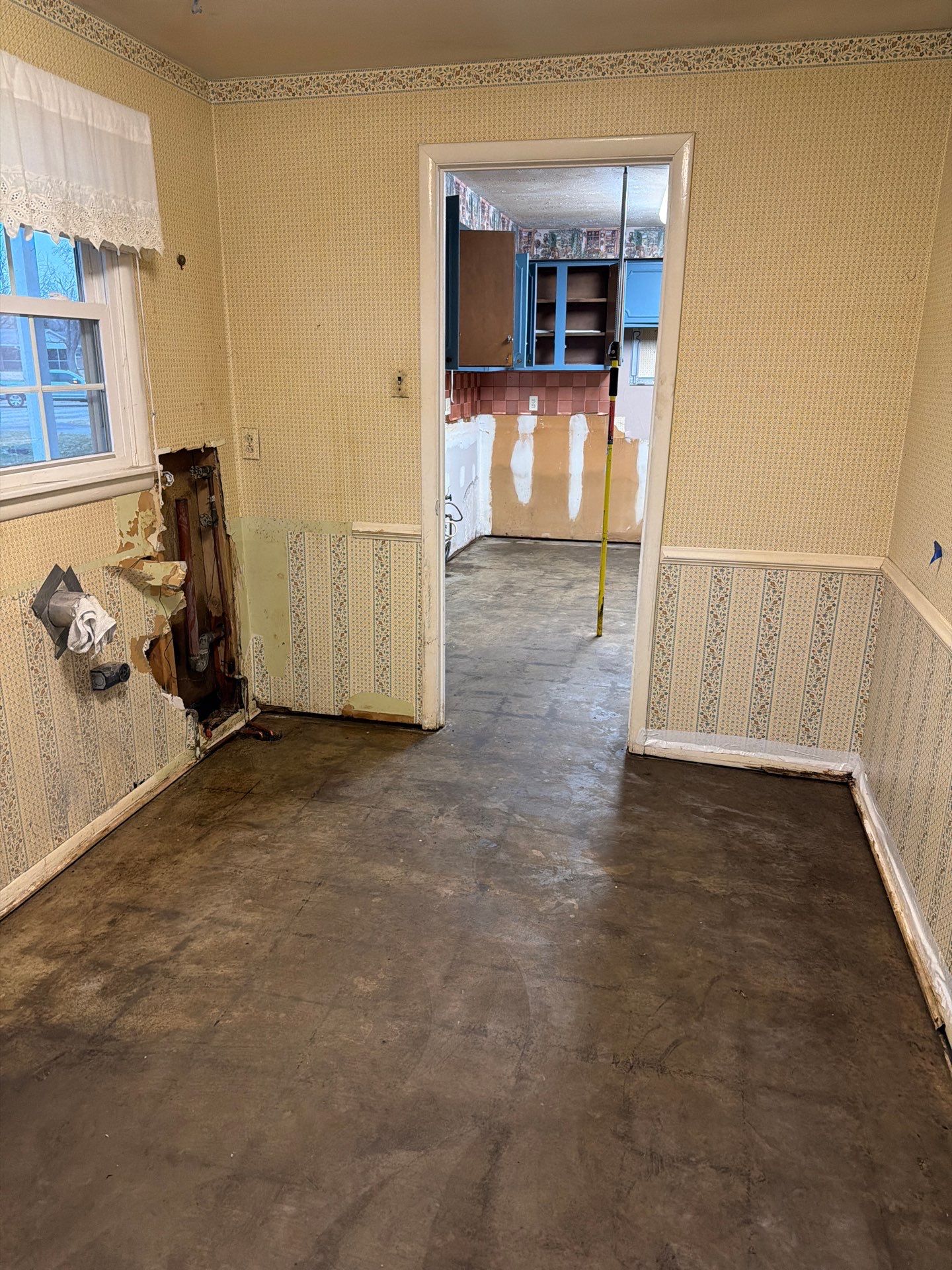
Problem: You Cannot See Where the Water Actually Went
Water on the floor is the obvious part. The trouble is that water travels along the path of least resistance, which usually means under baseboards, into the wall cavity, down through the subfloor, and along framing members. By the time you notice a damp spot, the moisture footprint is typically two to three times larger than the visible wet area.
Solution: Map the Moisture Before You Start Drying
You need a moisture meter, not just your hand. A pinless meter from a hardware store runs around forty dollars and reads through drywall and flooring. Check every surface within six feet of the spill, including the wall base, the floor, and any cabinet toe kicks. If readings come back elevated more than four feet from the source, or if moisture is showing up on a different floor, the water has migrated past what you can handle with rental fans. That is the point to call a pro. Our team in Belleville uses thermal imaging alongside meters to find what eyes miss, and you can read more about that process in our guide to signs of hidden water damage in your home.
Pay particular attention to areas you cannot easily inspect. Wall cavities behind kitchen cabinets, the space under a refrigerator or dishwasher, and the floor joists below a second story leak are all common hiding spots. A single cup of trapped water in an insulation batt can keep that cavity wet for weeks.
Problem: Box Fans Move Air, Not Moisture
This is the most common DIY mistake we see. Homeowners set up three box fans and a household dehumidifier, leave them running for a weekend, and assume the job is done because surfaces feel dry to the touch. The surface is dry. The drywall behind it, and the subfloor under it, often are not.
Solution: Match the Equipment to the Volume of Water
Professional drying uses air movers that push roughly 2,800 to 3,200 CFM each, paired with low grain refrigerant dehumidifiers that pull 15 to 30 gallons of water from the air per day. A consumer dehumidifier pulls maybe 2 to 4 gallons. For a small, clean spill under 10 square feet that you caught within an hour, consumer gear is usually enough. For anything larger, or anything that sat overnight, you are fighting math you cannot win. The professional drying timeline guide breaks down the equipment ratios we use.
Placement matters as much as horsepower. Air movers should be angled at roughly 15 to 45 degrees against the wet surface, not pointed straight at it, so the air sweeps across the material and lifts moisture into the room air. The dehumidifier then has something to grab. Pointing a fan directly at wet drywall just pushes saturated air around the room.
Problem: Porous Materials Hold Water Longer Than You Think
Carpet pad, drywall, insulation, particle board, and hardwood all absorb water at different rates and release it at very different rates. A laminate floor can look fine on top while the underlayment stays saturated for a week. Solid hardwood will cup, then crown, then split if the bottom side stays wet while the top dries.
Solution: Remove or Open What You Cannot Dry in Place
Carpet pad almost always needs to be pulled and replaced after a soaking. Baseboards can be removed and saved, which also gives air movers a path into the wall cavity. Drilling small inspection holes behind the baseline of wet walls lets you push warm dry air directly where it needs to go. If you are not comfortable doing that, it is a sign the job has outgrown DIY territory.
Problem: Insurance May Not Cover DIY Mistakes
Most homeowners policies cover sudden and accidental water damage, but they expect reasonable mitigation. If you dry the surface and leave hidden moisture that causes secondary damage weeks later, the carrier can deny that second claim as a maintenance issue.
Solution: Document Everything, and Know When to Hand Off
Take photos before you move anything. Keep receipts for any equipment you rent or buy. Write down moisture readings with dates. If you decide partway through that the job is bigger than expected, calling a certified restoration company actually strengthens your claim rather than weakening it. Belleville Water Restoration provides documentation that adjusters in Belleville accept directly, and our crews typically arrive within 2 hours of your call for a free assessment.
Problem: Not All Water Is Safe to Handle Yourself
Clean supply line water is one thing. Water from a dishwasher, washing machine, or anything that touched the floor for more than 24 hours is a different category. Sewage backups and toilet overflows from past the trap are a third category entirely, and DIY cleanup of those can put your household at real health risk.
Solution: Identify the Water Category First
The IICRC S500 standard sorts water into three categories:
- Category 1: Clean water from supply lines, no contaminants. DIY drying is reasonable if the spill is small and caught fast.
- Category 2: Grey water from appliances, aquariums, or sitting Category 1. Contains bacteria. Should be handled with PPE and disinfection.
- Category 3: Black water from sewage, ground flooding, or any source past a toilet trap. Professional remediation only.
If you are looking at Category 2 or 3, stop and call. Our breakdown of water damage categories goes deeper if you are not sure which one you have.
Problem: The 48 Hour Mold Clock Is Real
Mold spores are already present in every home. They need moisture and time, and they get active within 24 to 48 hours of a wetting event. If your drying setup is not getting structural materials below 16% moisture content within that window, you are growing a second problem on top of the first.
Solution: Be Honest About Your Timeline
Ask yourself three things. When did the water actually start (not when you noticed it)? How many square feet of materials are wet? Do you have the equipment running 24/7, or only when you are home? If the water sat more than 24 hours before drying began, or if more than one room is affected, the realistic DIY success rate drops sharply. At that point professional intervention is cheaper than the mold remediation you will need otherwise.