Commercial Flood Damage Cleanup in Belleville, IN
Pallets, fixtures, and records packed out and inventoried while the crew dries your Belleville building section by section.
Belleville Water Restoration provides professional Commercial Flood Damage Cleanup in Belleville: emergency availability every day of the year, certified crews, and coordination with your insurance carrier on approved claims. Call (765) 676-3491.
- Service: Commercial Flood Damage Cleanup for Belleville homeowners
- Service area: Belleville, IN and surrounding areas
- Response time: 24/7 live dispatch; emergency crews prioritized for Belleville
- Licensed and insured (License #RC21100059)
- Serving Belleville, IN since 2018
Commercial Flood Cleanup in Belleville
We handle commercial flood cleanup across Belleville, and we'll start with the areas your business needs back first.
Flood Exposure Here
Flood risk here runs highest for sites close to White Lick Creek. Your building's own flood exposure gets mapped when we walk the site with your facilities contact.
Our flood crews work commercial sites throughout Belleville, including the blocks around the Cosner Branch stream corridor and Cascade High School. We also handle commercial flood cleanup in Danville, Stilesville, Plainfield and Cartersburg.
Commercial Flood Damage Cleanup for Belleville Businesses
When a mainline break puts water under a retail sales floor, the problem is the volume and how long it sat there. Fixtures have to come out, flooring has to come up, and the slab underneath holds moisture long after the surface looks fine. Belleville Water Restoration brings commercial extraction equipment to Belleville losses and maps every wet square foot before the first piece of flooring gets pulled, so the scope matches what the instruments found.
Belleville Water Restoration runs commercial flood losses in zones, so the parts of your Belleville property that reach dry standard can go back into use while the crew keeps working the rest. Each zone has its own readings, and each release gets documented with the numbers behind it. You decide how to sequence reopening with your own occupancy requirements.
Concrete gets its own drying plan. In situ relative humidity probes go into the slab at marked locations, surface readings get taken alongside them, and both get logged daily so the curve is visible. Desiccant dehumidification pulls the vapor pressure down far enough to move bound water out of masonry and concrete, which is slow work and the reason a commercial slab usually outlasts the rest of the drying scope.
Flood policies and property policies each set their own notice requirements, and proof of loss paperwork can carry short deadlines. Report the loss as soon as the water is under control, and ask the carrier to confirm every deadline in writing. Belleville Water Restoration supplies the photographs and readings for your Belleville property that the paperwork draws on.
Ask what a commercial flood crew is bringing before you hire one. Belleville Water Restoration shows up in Belleville with submersible and trash pumps, truck mounted extractors, refrigerant and desiccant dehumidification, HEPA negative air and instruments for concrete. Call and a crew is dispatched within two hours, day or night.
Signs You Need Commercial Flood Damage Cleanup
If you notice any of these in your Belleville building, schedule a free inspection before the issue worsens.
Retail storefront taking water under the front doors during a heavy rain
White powdery efflorescence appearing on block or poured concrete walls on a below grade level
Dripping from the deck above into a drop ceiling, with wet insulation visible through the grid
A musty or sour smell strongest at return air grilles or when the air handlers first start up
Parking lot storm drains backing up and pushing water toward the entrances
Stored files and inventory that sat in floodwater on the bottom shelf or floor
Floodwater that reached electrical panels or outlets on the ground floor
Foundation wall or slab joint still seeping water days after the rain ended
An expansion joint or control joint in the slab weeping water or staying dark for days
Floors that stay cold and damp for days after the water is gone, even with the HVAC running
How Belleville Water Restoration Handles Commercial Flood Damage Cleanup
We follow these steps in order on every Belleville job.
Details From the Call
The dispatcher collects the basics by phone, from the water source to the power status, and tells you what to leave alone until the crew arrives, such as wet electrical gear. A building contact is recorded so the crew can get into your Belleville property.
Two Hour Dispatch
Belleville Water Restoration dispatches a commercial crew to the property within two hours of the call, day or night. The truck arrives loaded with submersible and trash pumps, truck mounted extraction, dehumidification, air movers, moisture instruments, and containment material for the square footage reported on the phone.
Waterline and Condition Photos
Before anything moves, the crew photographs the building as the water left it. Waterline marks get measured at several points in each room, with depths and heights logged beside the photos.
Removing Soaked Materials
Porous materials soaked by floodwater, such as carpet and drywall, come out to the height the readings call for and get bagged where they fall. Each area is photographed before and after, and quantities go in the log.
Closeout File and Repair List
You receive the photographs, readings, equipment logs and disposal records in one file, along with a list of what was removed room by room. The people doing the repairs can scope from that list.
Commercial Flood Damage Cleanup in Belleville
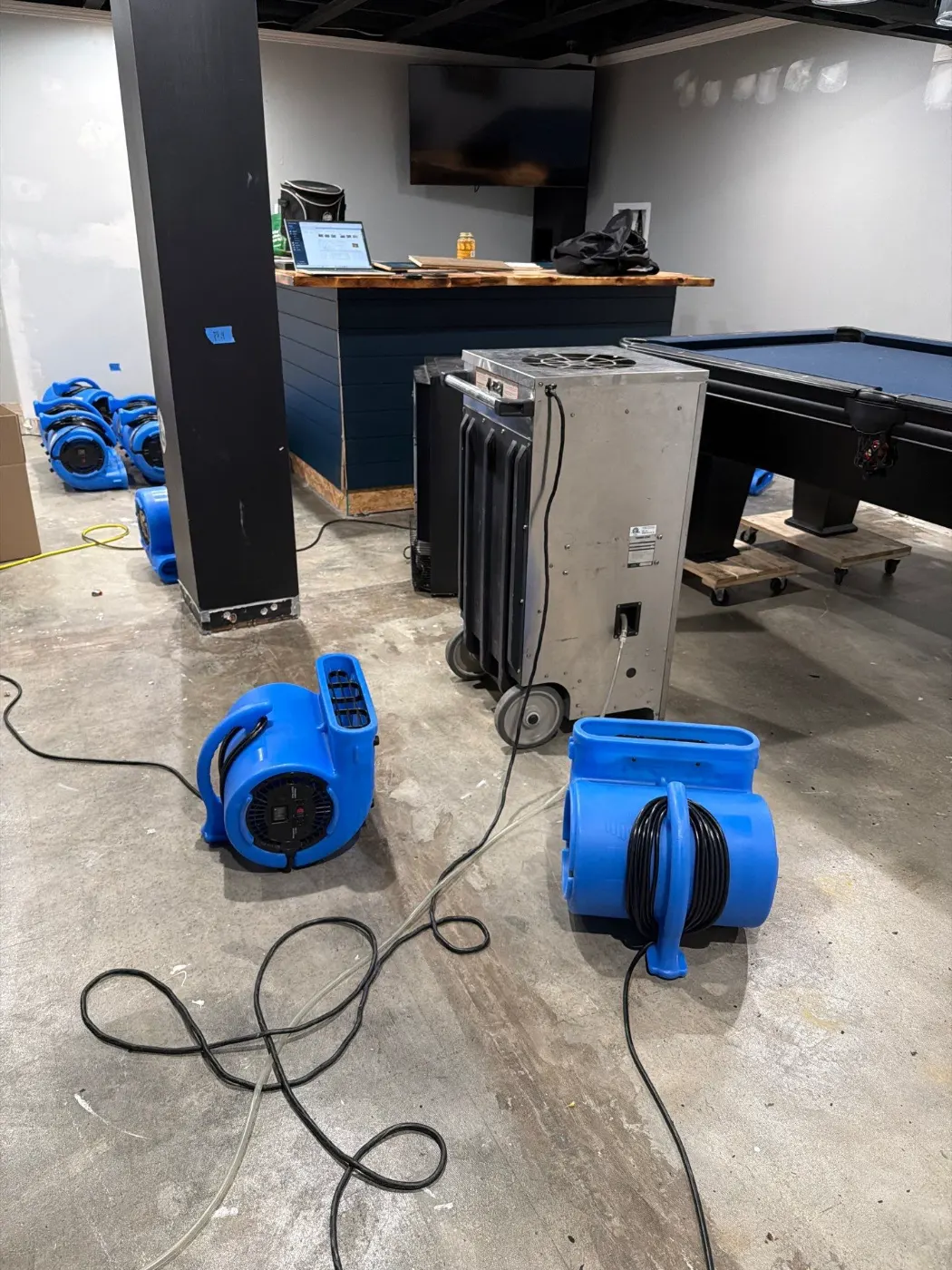
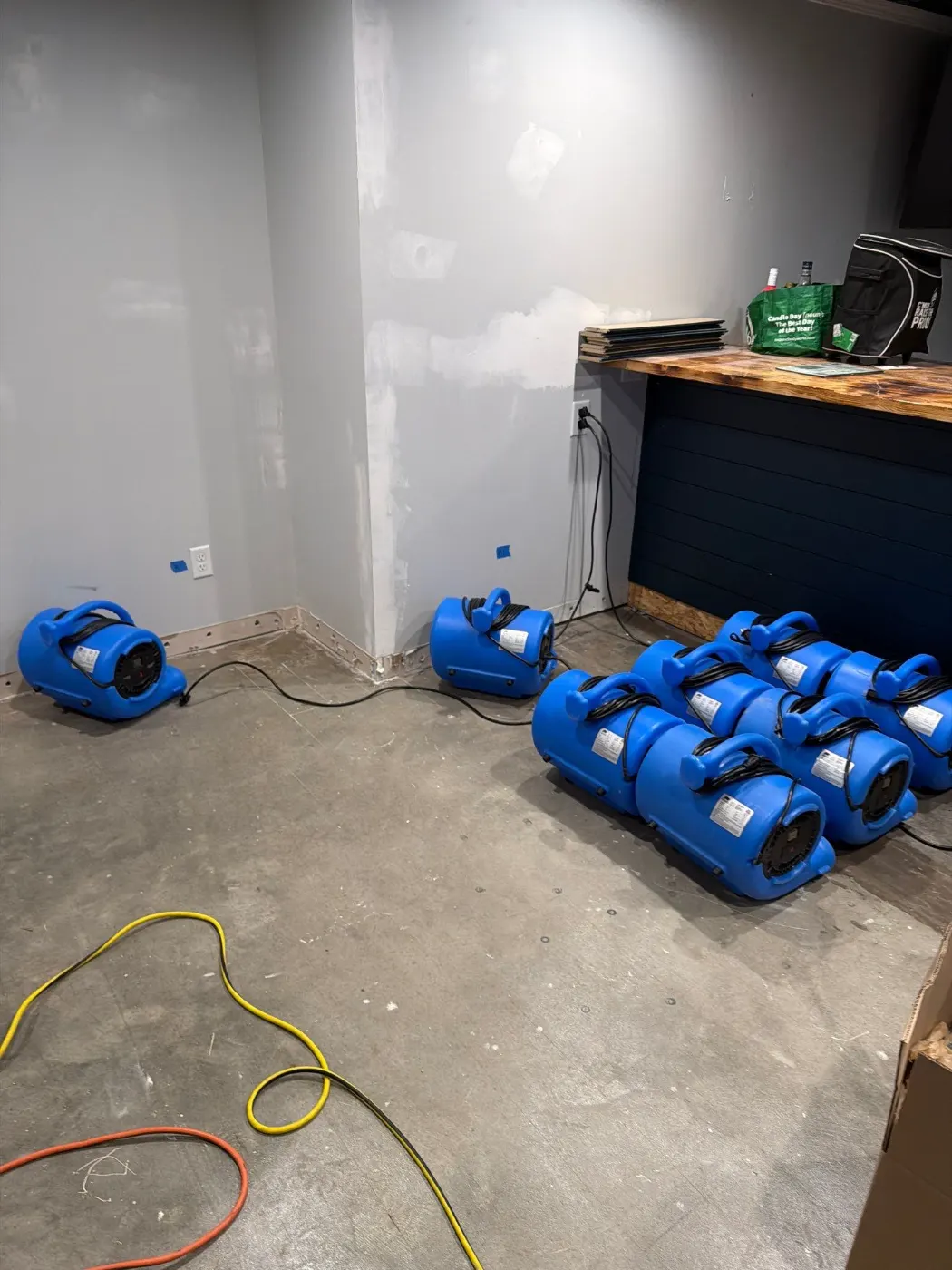
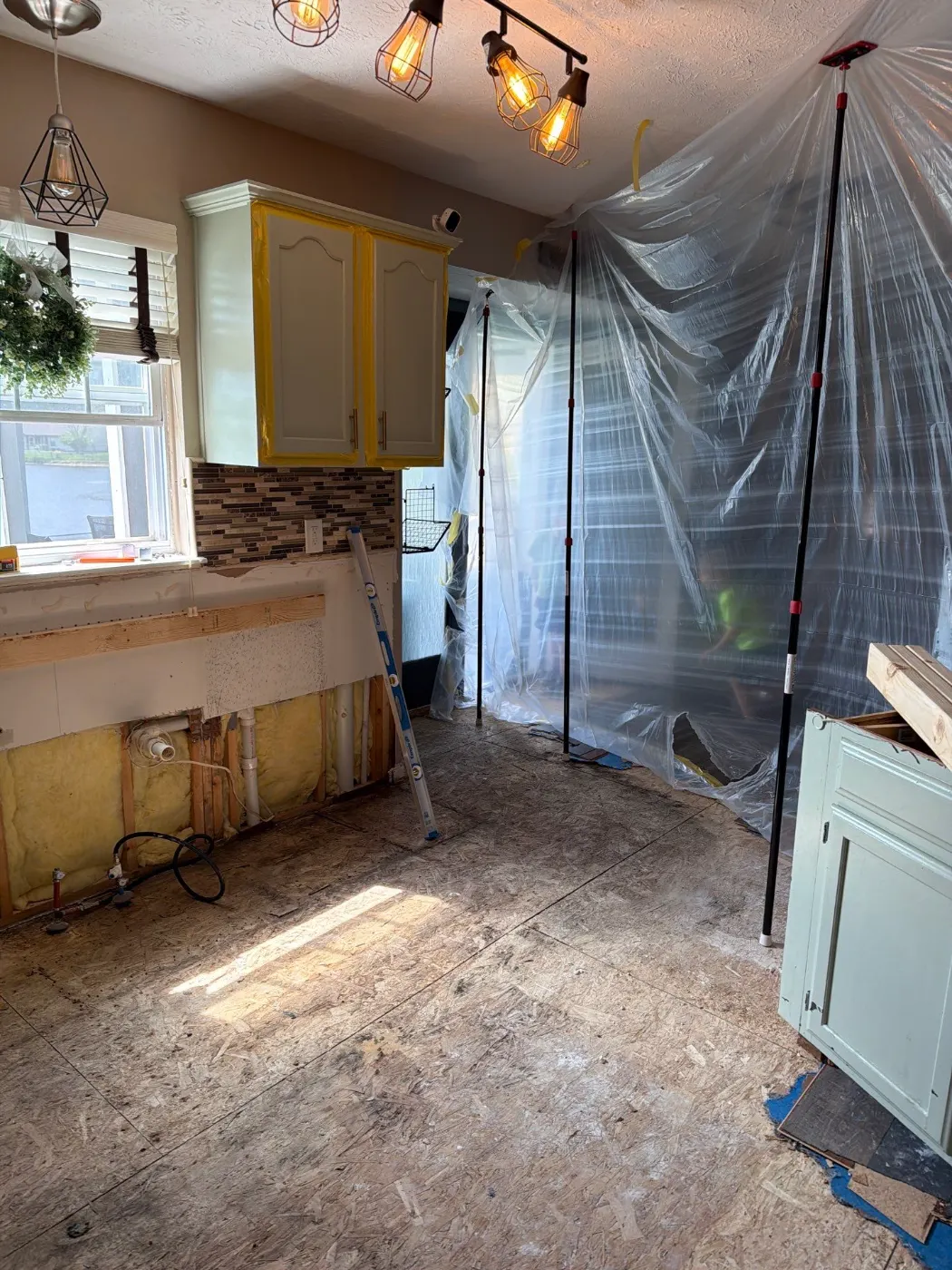
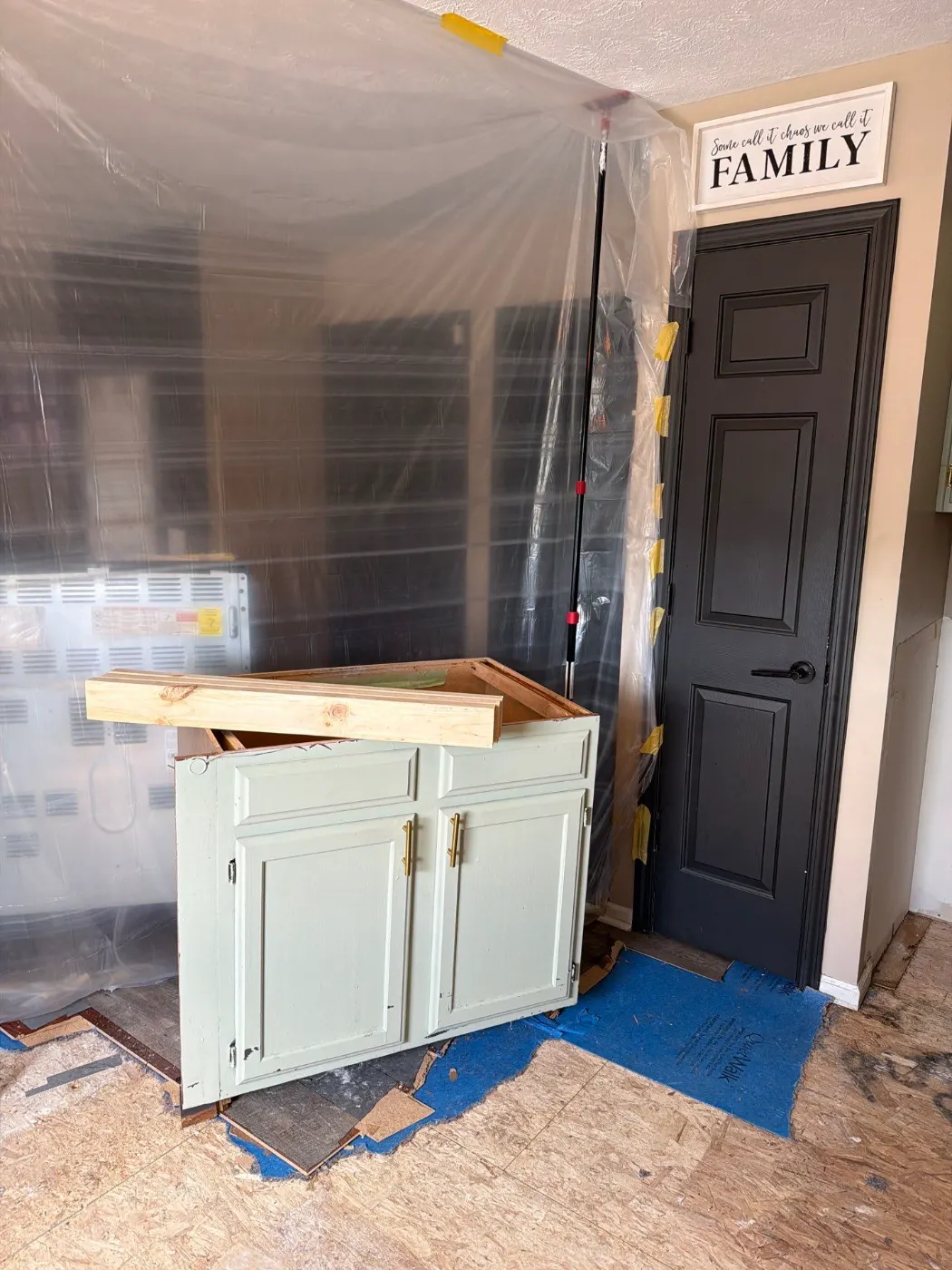
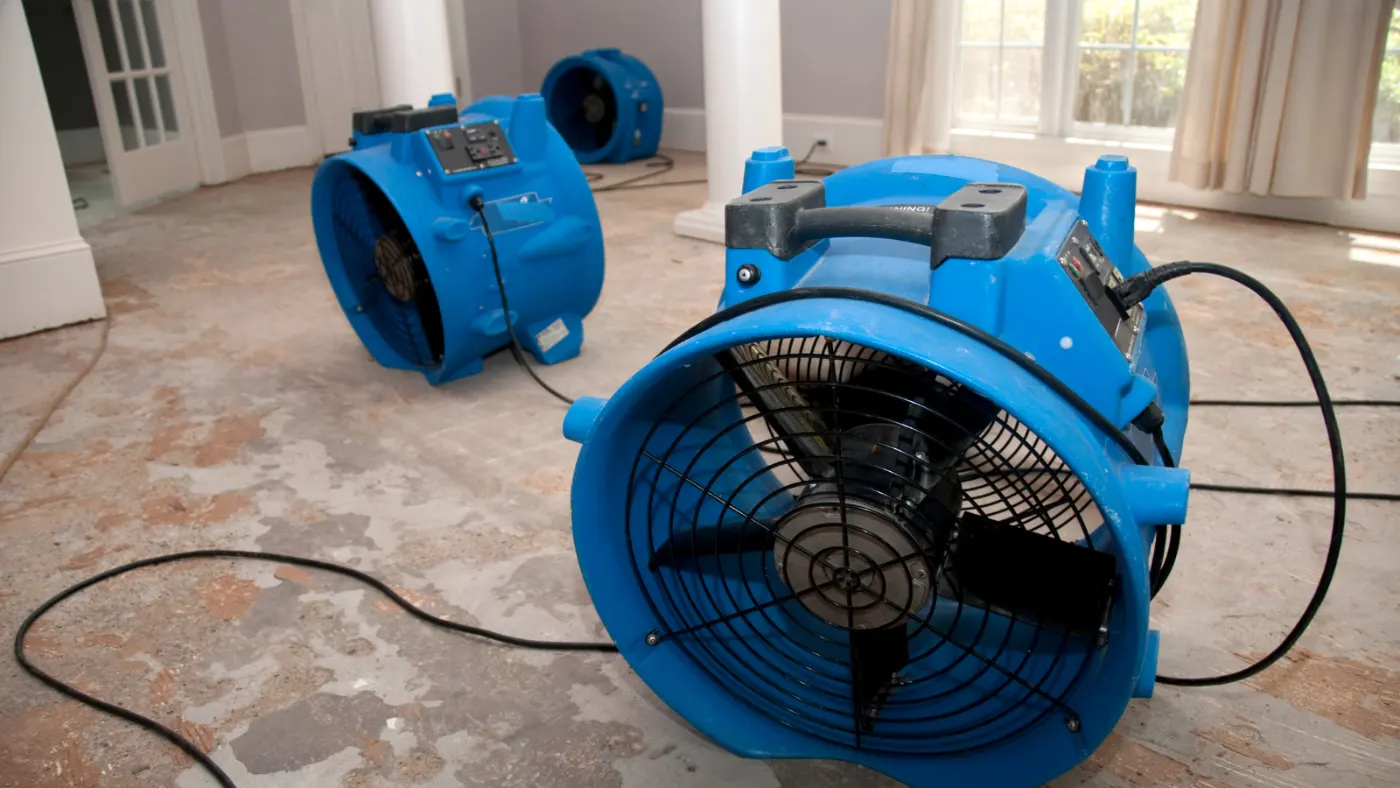
Photographs from real commercial flood damage cleanup jobs completed by our crew in Belleville and surrounding areas.
Commercial Flood Damage Cleanup FAQ
Questions Belleville property managers ask us about commercial flood damage cleanup.
Guidance and Standards for Commercial Flood Damage Cleanup
- The ANSI/IICRC S500 is the published standard for professional water damage restoration. The current edition is the Fifth Edition, 2021. IICRC S500 Standard
- EPA advises drying water damaged areas and items within 24 to 48 hours to prevent mold growth. EPA: A Brief Guide to Mold, Moisture and Your Home
Belleville Neighborhoods We Serve
We take commercial flood damage cleanup calls in every part of Belleville. Pick your neighborhood for local details.
Other Restoration Services in Belleville
Belleville Water Restoration handles the full scope of restoration work. Explore our other services below.
Water Damage Restoration in Belleville
24/7 emergency response. IICRC certified water restoration from extraction to full dry out.
Learn more →Basement Flooding in Belleville
Basement water emergencies handled fast. Extraction, drying, mold prevention.
Learn more →Sewage Cleanup in Belleville
Category 3 biohazard cleanup. Full containment, decontamination, structural restoration.
Learn more →Request Commercial Flood Damage Cleanup
Reach Us Directly
Our team is available 24/7 for emergencies and ready to schedule inspections during business hours.
Need Immediate Help?
For active water or mold emergencies, call us directly. We are available 24/7.