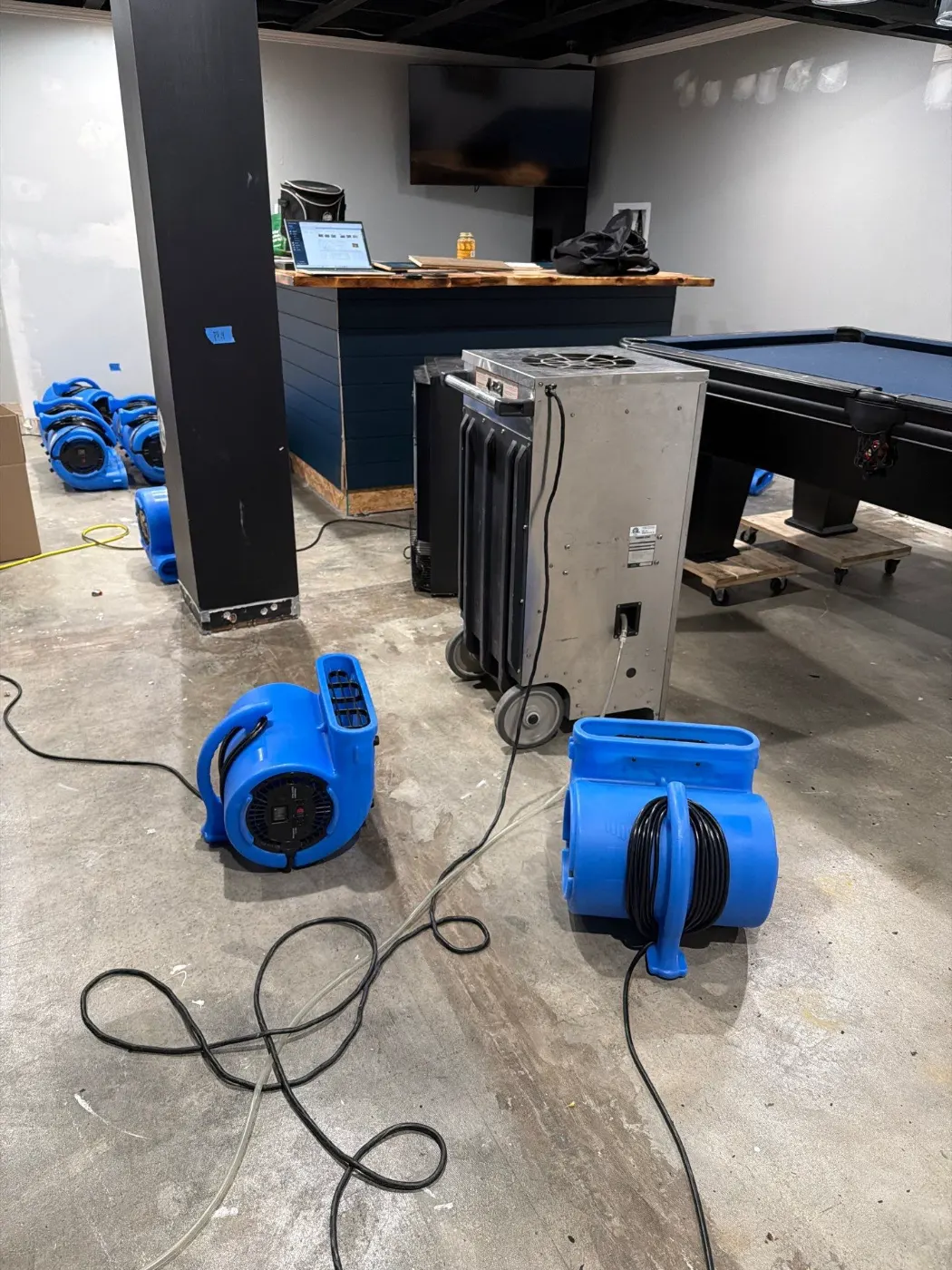
Commercial Mold Remediation in Belleville, IN
Belleville Water Restoration finds the water behind the growth in Belleville and documents it for ownership.
Belleville Water Restoration provides Commercial Mold Remediation in Belleville, IN. IICRC certified crews, scheduled assessment, and a written scope before work begins. We work with your insurance carrier on approved claims. Call (765) 676-3491 to schedule.
- Service: Commercial Mold Remediation for Belleville homeowners
- Service area: Belleville, IN and surrounding areas
- Response time: Inspection scheduled quickly, written scope follows the visit
- Licensed and insured (License #RC21100059)
- Serving Belleville, IN since 2018
Commercial Mold Removal in Belleville
For commercial buildings in Belleville, we'll track down the water feeding mold growth before any material comes out.
Moisture Sources Here
Buildings near White Lick Creek can take on floodwater, and anything left wet afterward can grow mold. We'll go over the air handling and any past leaks on the first walkthrough with whoever runs the building.
We take commercial mold jobs anywhere in Belleville, including the streets around Cascade High School and Mill Creek East Elementary School. We also handle commercial mold work in Danville, Stilesville, Plainfield and Cartersburg.
Commercial Mold Remediation for Belleville Businesses
Midway through a tenant improvement, a general contractor opens a wall and finds the back of the drywall dark. Every trade on the schedule is now waiting on an answer. Belleville Water Restoration handles these mid project finds in Belleville by scoping the affected area and building containment around it, so work elsewhere in the suite can keep moving.
A commercial mold file gets read long after the work is done, by lenders, buyers and sometimes counsel. Belleville Water Restoration logs moisture readings by location and date, photographs containment, affected assemblies, removal in progress and cleaned surfaces, and keeps disposal records for the bagged material. That file for your Belleville property answers questions nobody can answer from memory.
Tenants get notice before the crew shows up. Belleville Water Restoration tells building management what the containment will look like, which corridors and restrooms are affected, how long the equipment will run, and what the noise and access situation will be. Property managers generally want something they can forward to tenants without rewriting it, so the team provides that in writing. Clear notice up front keeps tenant questions manageable while the work runs.
Who pays often comes down to the lease before it comes down to the policy. Landlord responsibility for building systems and envelope, tenant responsibility for leasehold improvements, and the allocation written into the lease all affect who files and who funds the work. Belleville Water Restoration provides one documented scope and one set of findings that both parties can work from, which tends to shorten the argument. The team doesn't interpret your lease or your policy for you.
Due diligence findings come with timelines attached. Belleville Water Restoration schedules the inspection in Belleville, IN, documents the condition to the IICRC S520 and produces the kind of file a lender or a buyer's consultant can follow. Call the team with the report you were handed, and the visit gets set around your deadline.
Signs You Need Commercial Mold Remediation
If you notice any of these in your Belleville building, schedule a free inspection before the issue worsens.
Loading dock leveler pits that collect water beside an office or break room wall
Ceiling tiles bowing in the middle of the span after a week of heavy rain
Visible growth on the paper facing of batt insulation sitting above the ceiling grid
A written tenant complaint that names a stain or an odor in a specific room
A room that was dried out after a leak but still smells damp weeks later
Water marks on inventory or cardboard stored directly against an exterior or below grade wall
Moisture meter readings that run high in a wall that looks and feels dry from the room side
Door frames and wood casing that have swollen and stained near an exterior entry
Cabinet bases in a break room that have swollen or delaminated around a sink supply line
Discolored growth on the back of casework or millwork pulled away from an outside wall
How Belleville Water Restoration Handles Commercial Mold Remediation
We follow these steps in order on every Belleville job.
Stopping Active Water
If water is still arriving, stopping it comes before anything else. The crew works with the building engineer to find the valve or penetration involved, then controls it temporarily so the area stops getting wetter while the scope is written.
Protocol and Consultant Review
When an industrial hygienist or an engineer is involved, Belleville Water Restoration reviews their documents with them before the scope is finalized. Containment limits and verification steps get reconciled with the building's constraints on paper first.
Utility Isolation and Power Plan
Circuits and water lines that pass through the work area get isolated by the building engineer, and the crew confirms they're dead or shut before demolition. Dedicated power gets located for the negative air machines so pressure holds overnight.
HVAC Isolation
The crew coordinates with the building engineer to shut down or rebalance the affected air handler and seals its registers inside containment. Growth inside the unit or on duct insulation gets flagged for your HVAC contractor, and that work gets scoped separately.
Affected Material Removal
Porous material with growth in it comes out: saturated batt insulation, affected gypsum board and ceiling tile. Crews mist material before cutting, bag it inside containment, wipe the bags down, and carry them out through the decontamination entry on an agreed route.
Commercial Mold Remediation in Belleville
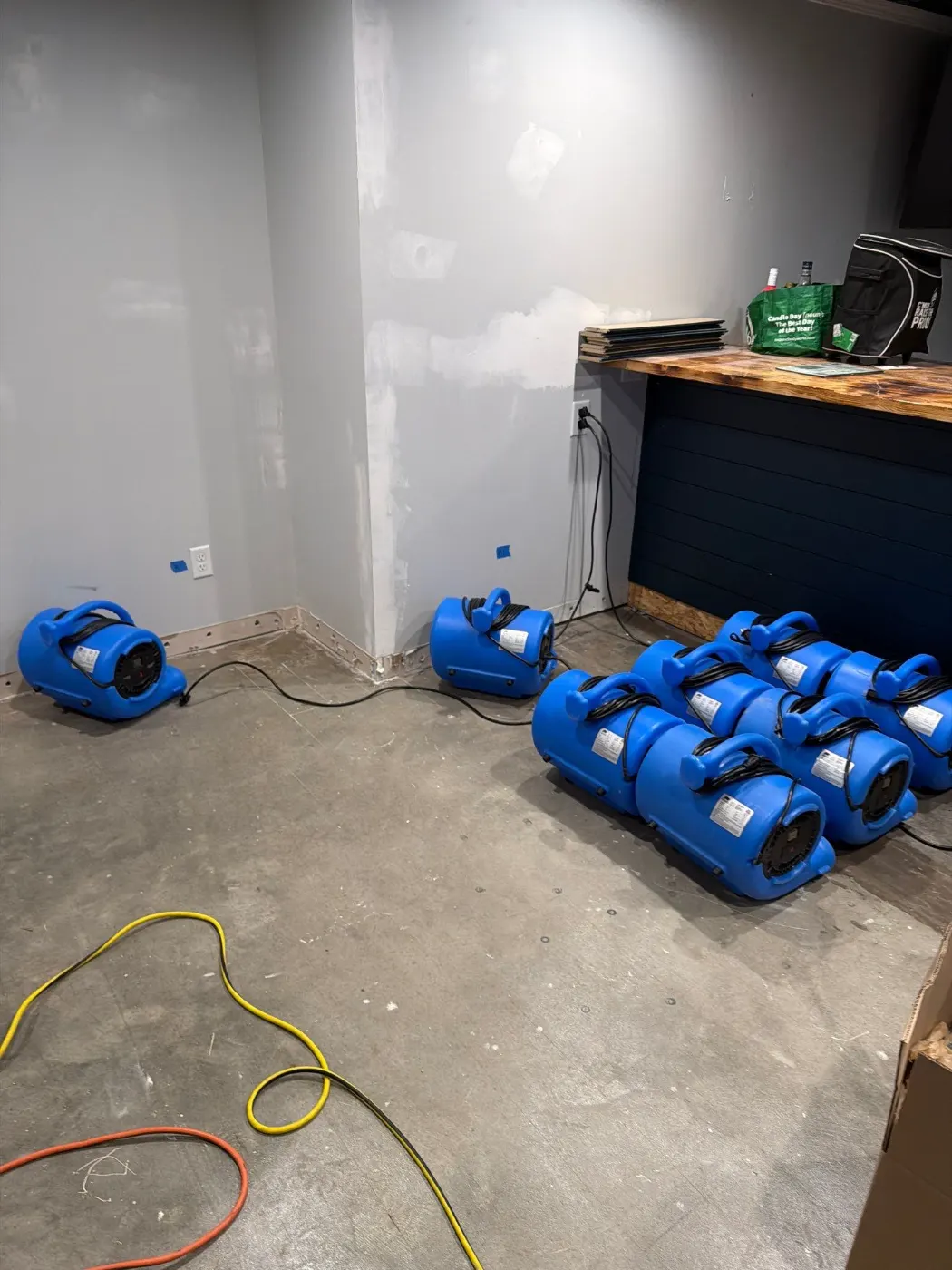
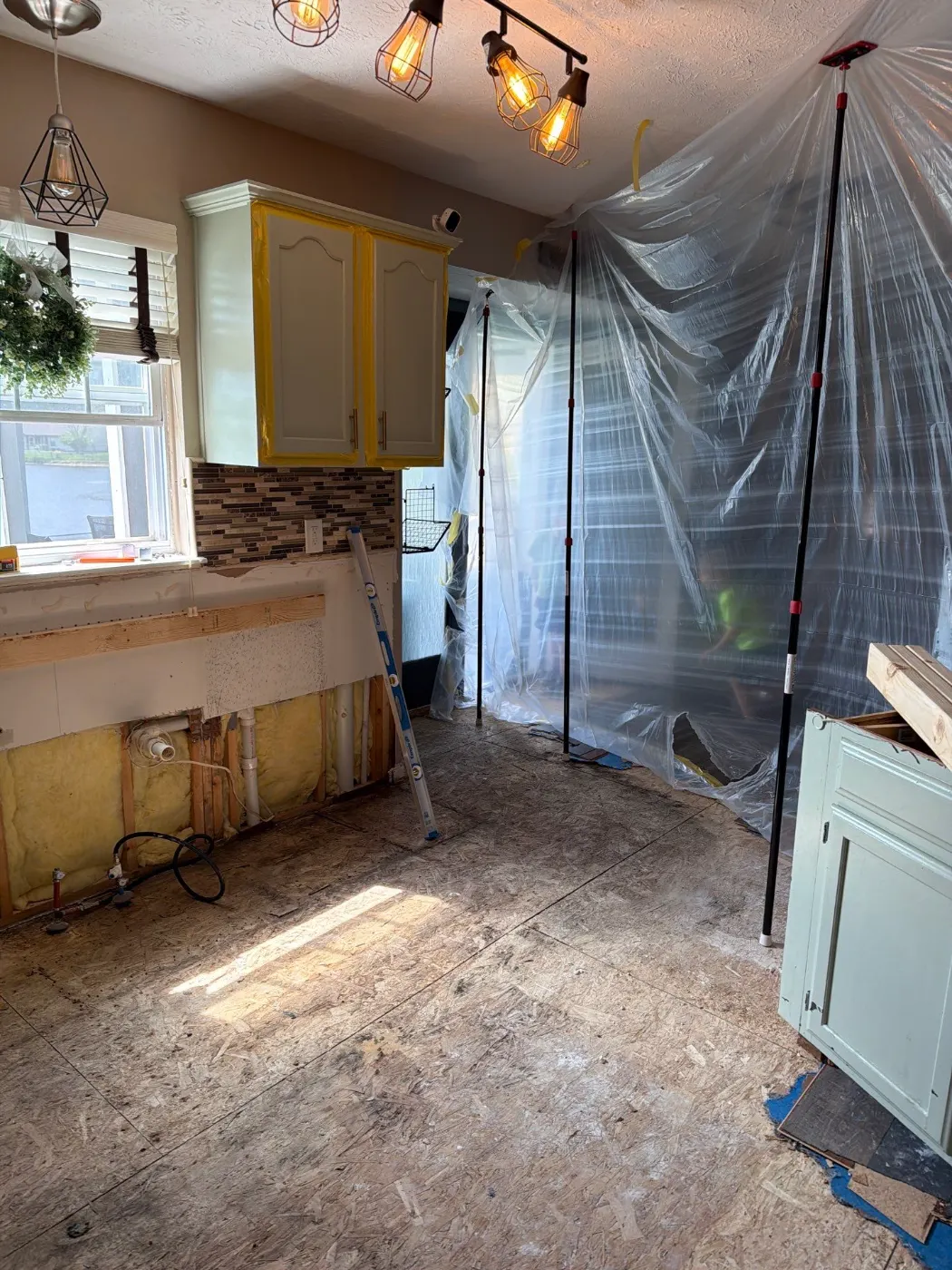
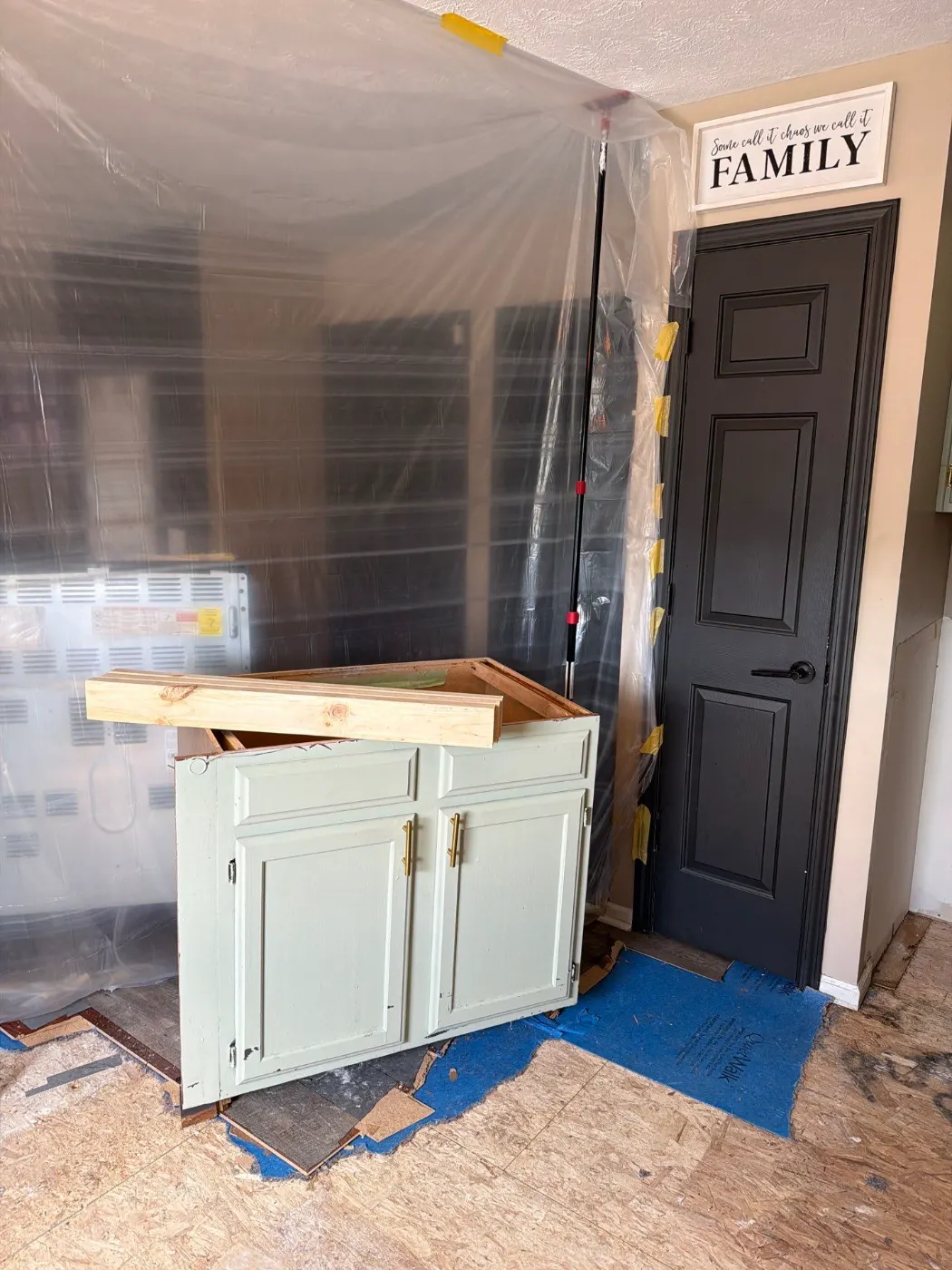
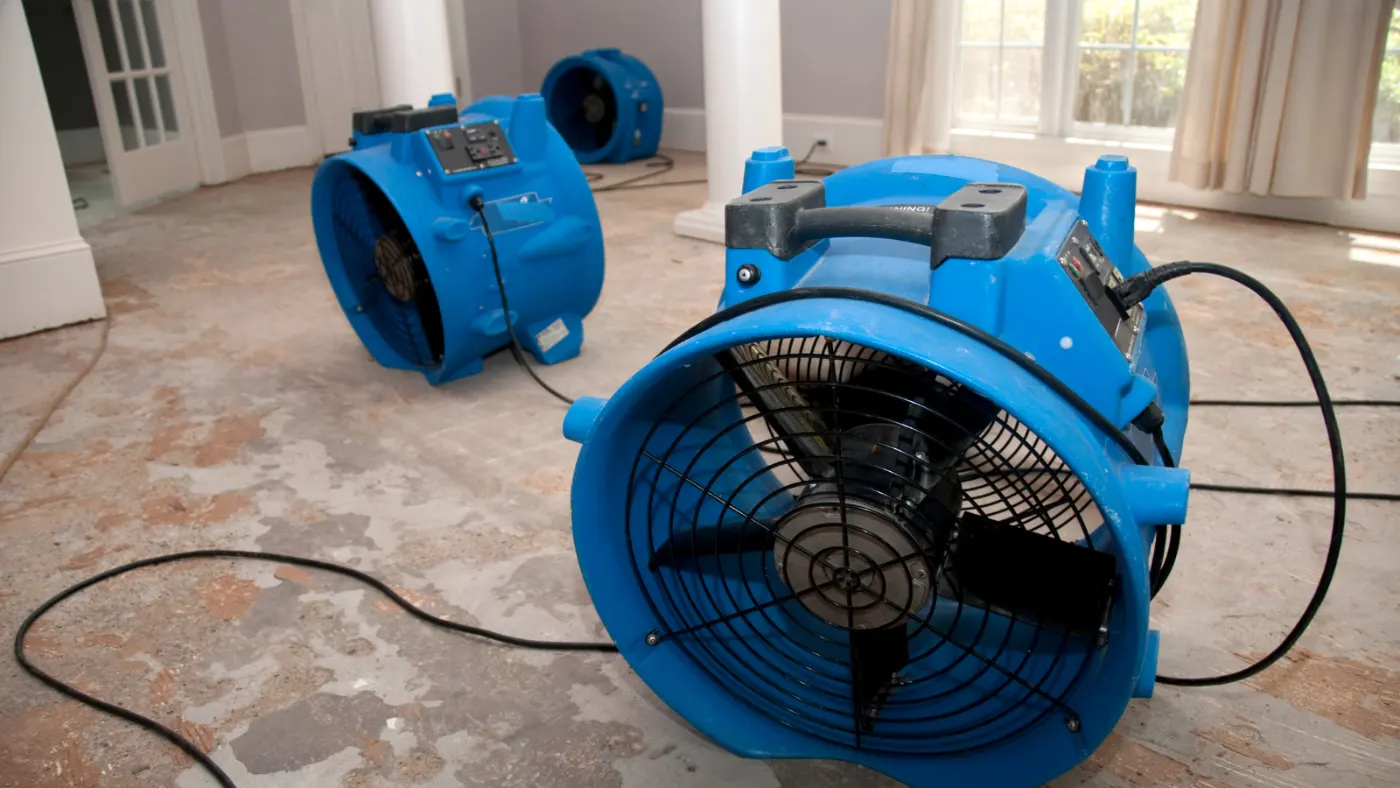
Photographs from real commercial mold remediation jobs completed by our crew in Belleville and surrounding areas.
Commercial Mold Remediation FAQ
Questions Belleville property managers ask us about commercial mold remediation.
Guidance and Standards for Commercial Mold Remediation
- The ANSI/IICRC S520 is the published standard for professional mold remediation. The current edition is the Fourth Edition, 2024. IICRC S520 Standard
- EPA’s mold guide says the key to mold control is moisture control. EPA: A Brief Guide to Mold, Moisture and Your Home
Belleville Neighborhoods We Serve
We take commercial mold remediation calls in every part of Belleville. Pick your neighborhood for local details.
Other Restoration Services in Belleville
Belleville Water Restoration handles the full scope of restoration work. Explore our other services below.
Water Damage Restoration in Belleville
24/7 emergency response. IICRC certified water restoration from extraction to full dry out.
Learn more →Basement Flooding in Belleville
Basement water emergencies handled fast. Extraction, drying, mold prevention.
Learn more →Sewage Cleanup in Belleville
Category 3 biohazard cleanup. Full containment, decontamination, structural restoration.
Learn more →Request Commercial Mold Remediation
Reach Us Directly
Our team is available 24/7 for emergencies and ready to schedule inspections during business hours.
Need Immediate Help?
For active water or mold emergencies, call us directly. We are available 24/7.